Monday, April 27, 2026

Crosstraining for runners - is it necessary ?

 Absolutely 100 % yes in every cases. Actually I would not call it cross training but supplementary training. After a while there is so much running that you can do, that training hours will be not enough to surpass yourself. 

I mean, that after a while you gain so much fitness if you trained correctly, that your speed gains will results in shorter and lesser training hours. You know a pro runner can run a 200km week in 15hours or faster. Most of their runs are at sub 4 minute pace. 

So, there a couple of decisions to make and ideas to absorb in case of cost benefit ratio. For instance a runner can integrate very stimulating strength and conditioning routines  to integrate into the warming up and cooldown of the runs on a way that it is sufficient for life long strength support. And can add in some road cycling and winter cross country skiing for recovery. We talk about a couple of 30 60minute rides in a week. 

Or, we can turn it the other way. That the cross training is also for training and benefits of it can be greatly pulled into running. In this case for instance we augment VO2max or LT training quantities. We can augment long efforts time. We can keep quiet high training volume post race or post effort.

Is it better to run a lot and train 10 to 15 hours a week. Or it could be better to run maybe a little less, but double or tripple training hours in order to benefit from the fitness gains. 

Most importantly we must talk about periodization and workout organisation. That is the actual key to pull fitness gains. Improvements are not coming right away and are not coming directly. For instance somebody who is doing mountain bike intervals and mountain bike training, besides trail running properly for a month, might need 2 to 3 weeks of easy de-training to get the recovery and the neuromuscular adaptations going on. Make your heart, lung and muscles stronger, than apply that strength to your sport. 

It is like body building and strongman. They have the all the muscles and they learnt to feel those muscles and train them in isolation. Now they must apply themselves dedicatedly to a more specific strength based sport. This is true only in the means of somebody who is doubling in. A pure body builder won't be able to compete in strongman, just like a road cyclist won't be able to compete in a sky running race. It is just not happening. 

In case of an injury that can be sort of untrue. You know, if you had some serious ITB syndrome or upper hamstring tendinitis, you can train for two months exclusively with a bike, barbells and ski-erg than start back running like you lost nothing. But this is very specific to certain scenarios.  

Now that we are into injuries, downtime, build back. If you had anything, not only injury, but a non possibility or a possibility, a chance, an invitation, if you knew a movement, you can do it and it can into your great benefit. It can build confidence. I have a friend who knows really well how to swim and lives near the see, but also a winter ski instructor. So when he get invited for a 30km swim run, well he just jumps in. If there was 45°C heat outside, instead of running and smoking himself, he can go and swim 2500m, then do some intervals, train his upper body. From September he very gradually adds in knee and hips stability than reinforcing training. For the ski season that is coming up. That extra training greatly benefits him for the cross country run season. 

For a year I ignored cardio based cross training. I did only 20 to 60minute long strength based training routines. Stability, core, fore arm, isotonic and isokinetic movements. Daily. In addition, I chop wood and use heavy machinery. It is fantastic, but I gained 10kg of weight. Like 6kg of muscle and the surrounding tissue, water and more. The thing is that I am still like 8 to 10% body fat. It is not ideal and very hard to loose. So I bought back a bike, in order to integrate cardio based training sessions. 

Killian is cycling some, rock climbing some, doing alpine stuff and also skiing winter time. Every body is doing it. I don't even say what Blumenfelt does and has been doing.  

Saturday, April 25, 2026

Run or not to run when sick ?

Everybody is fascinated with the articles, comments, books of Killian Jornet. That even we he is sick, he goes to train, even when he is feverish and delirious he trains, even when he feels like blacking out from illness during a race, he lines up and keeps on going. 

Other type of pro athletes or elite runners try to mimick it, but also some hard ars humans try to judge others by this sort of attitude. 

" I am real man, a real runner, nothing can stop me" 

"You don't have the mental, you don't have what it takes to be a runner"

These sorts of comments what actually most humans must ignore. In some cases, there can be some sort of appliction for self motivation, but in other cases and most cases, nothing at all. When sick and tired, rest relax, stretch out, read a book and reflect. Why is that ? 

It is simply, because while running might be one of or the most important thing in our life, we still must do other stuff. When it is pouring rain outside, what is the point waking up 4am to run a feverish, slow and agonising 15km run, than go for 15hour delivery work, again in the pooring rain oudoors on a bicycle or motorbike ?
Why go for a run midday coughing your lungs out, knowing that you could have slept for 45minutes in the breakroom, what would have permitted you better recovery for afternoon meetings, also making your back home commute safer and could have made you a better husband for the night, instead of blacking out in your bed. 
I got many friends doing physical work. Some of them are hard hard workers. Winter time, they wake up 3 or 4 am, go handle the kettle and the sheep, then fall trees all day long. They go out still night time, finish night time, in rain and snow it is the same. You think midday or night time they will go back to run ? Already without being sick it is extremely hard, but when sick, it is pointless.

You might say it is nothing, that I mention here. Often it is because of lack of life experience. A 32 year old somebody, living in Florida with no winter, freshly out of University with 3years of working experience, can easily judge. A 45 year old hard worker with already 30 years of full-time work background, who wants to work as hard till the end of his life, not only till 65, but longer, in health, strength and power, while preserving his passion for running is a totally different thing !

Also, having a laugh at some vomiting, fever, dizzyness is one thing. Making that sickness last for 45 days instead of getting rid of it 7 is also another. A runnins streak, training streak, race result streak is one thing. Suffering from other reasons than self induced pleasure is another. Why would you pull your sickness long, just because you want to shuffle 4 5 km twice a day to keep a streak ? No point !

If I had all the time I want on my hand. Sleep and wake up without alarm. Have all the money for supplements, and organic fruits and veggies, spices, meats and eggs. Could train on the inside. I would train during each sickness, no matter what. 

Imagine that perfect life. You can wake up at 9am, drink your water with salts, do your yoga in a sauna, have a good shower and a quality breakfast. Go back to sleep. Wake up at 11 again, do a great mobility session, then start with a steep uphill walk on a treadmill and keep on increasing the well monitored effort. Either walk or run some low threshold intervals. Cool-down, while hydrating. Quality protein and glucose replacement. Shower and a good afternoon nap. Dress up, sit near the fireplace, read a book. Then go and spend some time on the foam roller, do some warming up, and complete a session on the indoor bike in a heated room. Finish off with some strength and conditioning. Protein, full meal. Time to go and shiver in the bed, to have a good night sleep. Same next morning and next day and next week. No obligations, no other stuff to take care about. I would do 500000m of gain a year, spend tons of time on the bike, eat like a champion. Easy. 

So, no don't train when you are sick. Have absolute no excuse when healthy. Do your best and train constantly and smartly. Then, when you stop, you won't have any issues. If you can train 3 or 4 times a day Monday to Thursday, completing 15hours plus of training, then a bad weather pulls in, with obligatory travel in urgency in the weekend, you'll have absolute no  regrets. If you did do your lazy Monday and Tuesday, hoping that you can catch up in the weekend, so you finally end up with two training days, well that is not ideal at all. You know, I used to be stupid back in the day and with my wife working some nights, sleeping during the day, I had all the time in my hand. However, sometimes I did not use it very properly. I did not give my max for instance Monday to Friday. I went out for a 30km run both Saturday and Sunday super early, like 3 or 4am and spent the rest of the day on the bike, roaming the mountains, but also covering the attacks and the accelerations of other cyclists, completing like 30 to 35 hours of training in two days. That was not healthy, but during the week I was working out business ideas, looking for money making possibilities, reading unlimitedly all sorts of finance and business books, anatomy and physiology and everything that was coming out in the subject of running, trail running and cycling. I was making tons of videos and listening to all podcasts matter in double speed. 

Anyways, nowadays, I just keep it chill. Train my ass of when can and recover when cannot.  

Monday, April 20, 2026

Affirmation - another good race

Assuring racing quality and understanding current capacity is crucial. For me the most important thing before a race is warming up, preferably alone. And I need a long one. Even before a long event. The longer the better, the more I know and more prepared I am. The less race anxiety I have and the more the nerves go away. 

Before the past event, the trail des Citadelles, I did nearly an hour. This last weekends event was an 11km race. I did around 40minutes. I went out for a 20min speed walk with 100m of elevation gain, then jogged for 5minutes and ran for 15, did a couple of accelerations and lined up 8min before the start. I was chilled and lightly shivering when arrived in the parking. On the other hand, after  warming up, I had great warmth and felt rayons of heat coming out of me, but also was sweating already quiet a lot. I was ready.

This race the Trail de l'Hers, is a very small event. Nothing majestic. No great scenes or mountains, neither lakes or anything. Forest and hills. That is it. It doesn't want to be much more. Great local event. Very cheap too !

This is why actually, because of it's simplicity, it brings runners to test, to run, to enjoy themselves. Regulations are also light. 16 years old can come to the 11km event and also there is no obligatory equipment really. 

Talking about young lads like 14 to 20 years old. When you don't know pain, when you don't know dehydration, and hypo, suffering and injury, when you don't know blowing up really, you are fearless. You go out from the gun like it was a death race. I personally even as a young lad, never liked it, but this is how it is. The freckin' start line was like a 400m track. The first 100m was sprint and I could not even keep up with the first 40 guys. Then of course after the sprint we were settling into a modest pace of around 4:15/km and those lads were dropping off, then started climbing after 1.5km and more were dropping off. Then at 2km we did 100m of elevation gain and they were really dropping off. When you arrive to the climb, with already so much acid in your legs that you cannot even run anymore, well, the final 8km will be a total agony. 

There is no nutritional component, no heat management, no hydration, no handling chaffing, no poles involved and so. It is simple, balls to the walls. 

Personally I have a hard time eating in the morning. I often wake up, drink 1L of water with salts and a coffee. So race morning, I also did the same, but drank only half a liter of water and the coffee. Did my mobility drills for back, hips, ankles and knees. Glut stretch and activation too. Then ate a handful of strawberries and blueberries. That is it. Nothing else. 
I started the warming up with a gel, took another gel 15minutes before race start. 45grams each. I usually take a double gel as the first one, one with 15grams of sugar, but it is a special high salt and high magnesium gel, then just one. I do this, because moving integrates those sugars into the circulation and flows sugar to the muscle. It helps with the fasts start and the second gel assures energy for the first 20 to 25 minutes.

I of course, like everyone else, had low points. But you just have to push through. Self talk. I say, just go go go, push push, don't worry, in 40minutes you cannot be in hypo. Even if it is very hot, you are well hydrated and it is physically near impossible to dehydrate or overheat in such a short time. Just go ! Rampage mode ! Keep the pace and the pressure up. I focus an awful lot on technique. Even when hands on knees climbing, descending or running flat. When running uphill, small fast steps, low arm carry, breathing. When running flat, bent elbows and high fists, kneedrive. When bombing down, cadence, arms on the side, balance and more. 

I finished 9th and first it in my class. 3min 50 sec between the first and me. Very dense field. Basically every 20 sec there was a runner. I think next year with the same effort I can be contestant for a podium. I am still 88 to 89kg. Getting more and more shredded, but that is a high weight. Loosing 2 kgs is nothing, but I already feel lighter and my shoulders and pecs, my arms and torso already have shrunk. I start slowly showing veins. The next 5 to 8kgs to loose will take time, but I am patient. It will not only be great for my health, but for perf too. The only thing that will be missed out on is brute strength. When you have the weight, you can push, pull and rip stuff. When you are light, you can do the same, but must be smarter. 

I am very happy, how the season advances, two podiums and first class finishes in the basket. One is during the first prestigious race in the season and the second is during a short distance fast race. Winter training and dieting starting to pay off !

Friday, April 17, 2026

Simple Thoughts - Ultra High volume / High Rep

Looking at some very special athletes in all sorts of sports, what distinguishes them is always high work volume. That is only one thing, but high quality work, like high workout volume. We don't just talk about recovery runs, warming ups and cooldowns, to jog around 250km a week. We talk about endless intervals. We talk about long long runs. Bike intervals. Tempo runs and so. We can talk about elites, like Seb Co, Marius Bakken or Kenyans. Killian or Blumenfelt. Nadal or Djokovic. Devon Larrat or Ramon Dekkers and Buakaw. I talk about martial arts as for instance Buakaw has like over 200wins, as he won most of the time, but that is only the strictly registered internet number. I think I saw somewhere that he has well over 400 total fights since child hood. As example Prince Nassim had like 37fights, so probably around the double of that in reality, what is nowhere near around Buakaw. 

That also shows passion and love. Making the possibility of overdoing it, in order to get out something extraordinary from the body. Look at Killians Training right now. He is coming off ski season. He wants to pound his legs, but he is doing t smartly. He runs only every second day, but he clocks a 40km run un der 3hours each time, with around 1500m of elevation gain. Certainly some road sections included. It is blazing fast, but probably over time, he is going to lower that down to around 2:40 to 2:45 especially if he wanted to mark his time in Zegama. Imagine running 3:36 with 2700m of elevation gain and loss on trails ? You need to be a very special human to do that. You also need very special training. 

This is just to heat up the conversation, but how can we, normal humans, integrate this high volume approach. And also become, unbeatable, immortal superheroes. 

First of all, of course, you need quality movement, quality body and ultra high quality fuelling. You cannot go out empty, dehydrated, with nothing on you. You need your gels, sugar, electrolytes. You need to be ready and prepped. It is not about time. It is about making it happen. 

Second most important thing in the same importance level is intensity control and race specificity. We have GPS watches for pace, optical heart rate for control, our own mind and body to feel. We also have references and understanding of effect of training stimulus. 
So, if you ran faster, just a little bit than you race pace, you are training well and stimulating your nervous system just enough, to make improvements happen. The more you increase the lengthy end of the races, the least true it becomes or the training itself becomes the least realisable. For instance a race that is so long that it it is won by 12min par kilometer, see TOR, doing intervals at 9 to 10minute pace is not really going to bring you anywhere. After of course, there is specificity, so 9 to 10minute pace, with a fully loaded backpack on tough and steep terrain, during a long run can be still very stimulating. Context is key ! Always, in anything ! Context !

The weaker, the more beginners we are, the shorter the intervals should be and the longer the recoveries should be.

To start out, during a run, this could be 100 x 10 seconds of fast running with 30 sec recoveries. This could be later on of course 100 x 1 or two minutes 30 x 4 minutes. There are not strict number on the other hand. It can also be tree to tree, fartlek, climbs and descents. For instance, a parcours that has 5 climbs can be completed 8 times, pushing the climbs. Nutrition can be also practised well during these efforts. Especially if we did tours and rounds. 

Strength and conditioning can be included too. Like doing that but mixed with running too. Even if you did little, after 40 sets, it will be a lot ! 
Like doing 25 times 1min uphill. Each departure you do 4 ass to grass squats and 4 lunges and each time you finishes you do 4 pushups. You'll be at 100 of each at the end. 

You'll see, this works like a charm. Actually it is also very addictive, as you feel a lot that you accomplished something during the workout. !!! 

Thursday, April 16, 2026

Facing injury - trail runners nightmare

Most importantly, we must know, understand and observe constantly our body. It sends signals all the time. Every single second. If we don't know anatomy, physiology, biomechanics on at least a basic level, we cannot react. Knowing how, what, when to do, how to research properly is key.

The type of injury matters a lot. You cannot do mobility, activation, stretching or percussion massage on a broken bone to heal it. Of course. This is why you must be sensible about what is happening. 

If you had a reoccuring or chronic injury, the answer is not in the treatment, but the correction of the cause. I have a knee issue now. Of course we talk about it with other runners. They ask me how to do it, how do I repair it that fast, how do I get out of this painful experience. 
I cannot answer them without engaging in an hour long conversation. Because the answer is not simple. Also I cannot send them away, as as a coach is kind of my work to educate. Some listen, some just keep the ears open, but don't understand. So first of all, understand that I work on my whole body daily and has been like that for 25 years now. I had like 2 knee issues in the last 25 years. Those issues never came from the knee. So don't ask me how to heal your knee problem just because I have also a knee issue. You can have a knee that is flaring up each month each year, or even just each two years. You can have a knee issue, flaring up only on the concrete or track. You can have a knee issue, that is flaring up only after a competition. However, if it flares up, it means that it has constantly probably low level inflammation or during that action or period, you are stressing it too much. Knowing that it should not be stressed at all ! There can be also flare ups coming from bad nutritional habits and bad training decisions, despite good biomechanics and posture. 

It is true both ways. You cannot exercise yourself out from a bad diet, and you cannot correct bad training habits with good nutrition. 

What I know from my body, that I do my daily mobility and flexibility routines. I do pilates and yoga weekly. I do daily strength and conditioning and besides that household chores, like chopping wood, lifting concrete blocks, drilling, disking, punching, hammering, climbing on the roof and trees, bending, crawling and so. I also focus on technique, practice technique, do balance training and feet activation. I even do special hands and wrist exercises for proper arm carry.  If I had an injury it came from something unknown. Like a bad combination of barefoot hiking, sprint drills and high volume kettlebell swings. High step up workout, a long run the previous day and chopping wood hard, without warming after beeing seated for 7hours front of the PC. I mean it is never unknown, but it can be sort of mysterious. I am a strong guy, who is working hard, often from 5am to 8pm. Starting out with water, cofee and writing, then workout, then prepare my tasks for work and work a little, then go to work, midday I run, work, then also I either run or chop some wood, work on the electricity or other renovation projects, I cook, stretch down, play dominos with the family, sweep the house and wipe the floor, than go to bad. I lift often heavy, carry, swing, think. Because of these constant activities, I often feel very much invincible. I always focus and always keep an eye on posture, nose breathing, chain of muscle contractions, posture and so. Except, that I am not invincible. There are activities, actually tons of type of movements, that I am not accustomed to. At all. I am a week little girl in those. 

We went for a small family hike with my daughter. I put on a backpack, like 7kg max. Clothes and 3L of water, food. I used the shoe for the hike, that I often wear all day long. Xero Scrambler. Quiet protective, but zero drop. Around 1cm thick, michelin outsole. After that 6km hike, I was smoked. All my body. The little 8kg pack and the walk. Knowing that I am doing 3 to 5 hour long runs and train around 13 to 15hours weekly. Or when we were doing the drills all the time, we did a little workout running up and down in a tunnel, doing vo2max training. The combination of rest and speed specificity, made my body react with aches and pain. Good pain that time. Like deep muscle fatigue. Good !

My approach is simple. Don't change anything, but do more of it. Work all joints, in all dimensions and after warmed up do it under pressure. I always, always and always find the spot, where I am tender, where I am more limited than usual. I foam roll for feedback. 20min on the roller and I know what to work on. Easy. I can correct a knee or hip issue, that in 3 days I am back in high intensity situation. I stay smart, and won't do a back to back to back race specific long run. But I can already do 10 x 20 sec uphill. And like yesterday, I also added in 5 x 15sec technical downhill. Stimulate that knee. Work around the pain. Speed up for more and deeper contractions, but shorten the reps. Make the recovery longer. Do mobility and activation between reps. 

You can actually do a 2hour 4km running specific workout that has more impact on your running economy and speed, that a 30km speed run. 

This is my approach, it works and it is efficacious.  

Monday, April 13, 2026

Find motivation - secret ingretdient

Find motivation. That is one of the biggest challenges in the life of an athlete. Motivation to get out. Motivation to train. Motivation to push those intervals. Motivation to race hard. The thing is, that there can be multitudes of motivations for one. Secondly, motivation can be totally something else than trail running. For me that is actually working. 

I of course have the basic stuff totally imprinted in my heart. I just cannot live without being in nature. I mean, really, I need that dose of forest, river, rocks and roots, champignons and trees, animals running around. I absolutely love, do, enjoy, search and travel to the mountains. I however am not as fascinated by the mountains as Killian or other Alpinist. I also am not as fascinated and motivated to go to places that nobody went. Understanding our own selves is crucial to not to fake our goals, motivation, to not to force something on ourselves that is not true to us. 
I was trying to find out for a long time why I love trail running so much. And it is actually not trail running what I like. It is movement and nature. Connected is the best, but separated is nearly as good. If I did a fantastic workout at home of kettlebells and maces, then ate and went for a nice walk along the local river, while the actual passing emotions might be different, the final nervous, bodily, soul recharge is the same. I just need movement and nature, that is it. My monkey wants it needs it. I don't try to resist it. My wife don't force me against it, because subconsciously I am not a good human if I did not have that daily those. Since I have found it out, that this is my personal calling, like to survive this current life and to try to be good at it, I need that daily dose. I kind of was doing that always, but never was conscious. After vacations in the mountains or forests I might have felt good for a couple of weeks, but was back in to a routine. After weekend hikes, I was often great till Tuesday, but the rest of the week was spent searching for an out. Then when I have found endurance, including running and cycling, living anywhere, made possible to be out in nature. Since 2006 or around I started being really conscious about getting my those and since then, I absolutely had zero relapse. Ever ! 
I often ran 14km on the concrete, just to run 10more kilometers on the trails, then 14 back home. Even in Dublin, I prolonged my run by 4km to go to work, just to run through the Phoenix Park, to see the deer and rabbits in the forest. When was cycling or cycling to work, I often took gravel roads, to really be away to all sorts of human noise and it was well before gravel. Tour de France riders have been adopting 25/28mm tyres for a long time, but in 2005, I was already looking for bikes with clearance to run 28s and 32 so I can go on more crappy roads. Gravel riding was nowhere to hear yet around !

Secondly, there is the daily motivation. Rain, snow, mud, dirt wind, cold, thunder, sun, family, emotions and more stuff to stop you. So that sort of motivation, to work against those negatives should come from elsewhere, then simply enjoying the presence of trees and bees. 
I know for instance, that I never have felt dissatisfied after getting either out, or to move. It of course happened, that I felt worst after than before. So many times. But the satisfaction is always there. The bodily and mental work is always there. Maybe the thank you from mind and muscle comes only in the future, but it is there. 
Then, what is crucial and absolutely crucial, is clothing. Without clothing and correct gear, you can be as motivated as you want, the will power will be frozen or get burnt out of you. We talk about daily and work clothing. If you are slightly chilled all day long, well, it will be hard to get out any time. If you were having good layers, home or office well heated, running clothes appropriately chosen, then it will be easier to go out. 

Of course, motivation is also a simple biochemical reaction in the body and mind. I say also and simple, that is not that simple, cause, somebody can have or have not  the motivation and will or will not go out. There is no real correlation. Bit it is still biochemcial. Slept well, hydrated, fuelled up, prepped and warmed up ? How enormously easier to get out the door ! 

Warming up ! Once you are warmed up, you get out easier. Fuelled up and warmed up, you can get out even without appropriate clothes. I had many runs in 3°C Drizzle and cold wind in t-hsirt and shorts. I popped in gel. Had a great mobility session than a dynamic warming up making all my joints hot, muscles loose and low back and spine activated. Then went and hammered a 40min 10km on trails. Why this is necessary ? Well, cross country races or some trail running races are so hard, so brutal, that if you don't train time to time race specific, you'll get left behind on the course. If you did put on a second layer sometimes even a just an arm warmer, you would be over heated. I had races with 2°C, pouring rain and wind and still was running in t-shirt alone and during the final 2km I gave my cap to the coach, cause I was over heating, because of a simple hat. Of course, to create body heat this way, you need fuel. That is not going to really happen on a morning fasted run. 

There can be race or performance motivations too. But I find that it is superficial. Beat other humans, or look for the adrenalin of racing on the front is something that fades. Community motivation is a thing, but if you needed every time a group or others to get out or to run, well, that might be not your thing at all. It is not sustainable for you. You'd better do something like gym training, volleyball or billiard, where you are surrounded by others. 

Just like other things in life, like owning a house vs an apparetment, having or not having animals, having a kid also, working for sustainable living, or spending money constantly, living in a city, metropolis, village or total isolation. All these are choices, callings, nature. Running and trail running is the same. It is normal that is not for everybody. 
When I hear something like that, I used to be running in my 30s. That is not so bad, 10 years. Then of course it continues, I was always injured, I ran two marathons, etc etc. So it is not actually in your 30s, but you ran for 4 years, around 800 hours in total and you finished dissatisfied two marathons. The thing is that this is actually quiet bad for the sport. Great for sporting business, cause the messes are there and also pushing the development of gear and shoes and stuff, but bad for the environment and bad for the racing too. I mean when you sign up for a race of 20km with 1000m of elevation gain, people running over 3hours have nothing to there. First of all it is not fun for anybody. Not even for them, not for the organisers, not for the nature. They are there just to eat, have a laugh and do a little hike. Did not train or train well, did not prepare in advance. They bought their shiny gear came in and participated. They could do a hike instead on any other weekend ! 
They have their right of course. It is just, that it is polluting the souls of the others. It is sort of taking away from the real lovers of the sport. And most importantly, they are raping their own souls !!! They might be way more attracted to totally other sort of , not even endurance related activities or not even sports. But, they saw all that shiny gear, GPS watches, compression sleeves, foldable poles, sunglasses and they were sold. I want to look like a ninja too ! First of all you cannot even run in sunglasses ! Unless you jog very easily, without bouncing, sweating on non technical terrain, you just cannot. Compression sleeves, well, if you have to put them on every time you run, if not you would be injured, you are surely not interested in your sport, to learn how to run, how to be efficient, activate the muscles or to know how a muscle is working. Why not choose the calling of your soul, the real meaning of your life right away ? 

Anyway, you need to find motivation in one of these ideas and more to be able to fulfil your dreams. I don't have personally dreams or wish-listes or anything.  I want to be enjoying myself out daily with me, or my family and later on I might have a dog too, that can also enjoy being out in the local forest and mountains. 

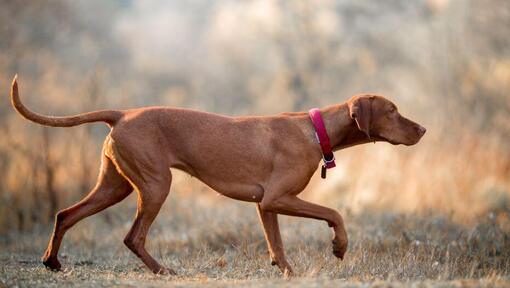
Braque hongrois (Vizsla) : information sur la race | Purina FR 

Just like that. A Hungarian Vizsla !!! 

Sunday, April 12, 2026

Nutritional order for recovery - trail running

Nutrition is crucial. What we eat is very very important, but how, when, in what order is what also makes ton of difference. Enormous gigantic difference !!! Especially if you follow something like a low sugar diet, weight loss program, high protein diet, low fat, high fat diet. I think that actually all dieting is a scam. Really. If somebody had a fruit garden and in Hawaii and have fruition season all year around, that is all normal, that he is eating high sugar, high water fruits as his main calories. Others might live in Canada, Alaska, Very South America or mountainous or Mediterranian Europe. We should abandon habits and acclimatise for local logical habits. When used to live in Malta, I was eating prickly pears and sea urchins, tomatoes, tons of fish, big fish and loads of greens. In Ireland, butter, beef, porc, loads of sea vegetables, potatoes, fish and sulfur rich veggies. On the Cote d'Azur, it was a lot of fish and also loads of fruits and veggies growing all year around. In Hungary, vegetables and fruits are exteremely seasonal and also meat is seasonal. Summer time it is often chicken and other birds and winter time it is porc. Beef, horse, turkey, goat, sheep is regionally eaten. Right now I am in the Pyrenese France, land of the apple and hunting. So yes, we eat loads of apples, loads of meat and loads of wild greens.

This is just to say that adhering to a particular lifestyle because it is appealing, I leave it to rich New Yorkers and the Fashionistas of big city people. 

For runners trail runners, eating well is crucial, but eating in an orderly fashion is what makes a difference. Red cabbage is fantastic for you, but you don't eat it before running. Not even 3 days before a race. Intermittent fasting is great, but if you want a performance outing, make sure you eat a caloric not fatty snack before your outing and take 2 to 4 gels your raining session. Actually, if you were healthy, handling sugars in an empty stomach can result in a very pure fast burning of energy. Efficatious with low emission. 

Post race and post workout you got this famous period of opening for protein absorption. This is why it is crucial to hydrate well. We need to be hydrated all the time. Taking in fluids is always the first thing. No dehydration ever ! When even 0.5% dehydrated, you cannot digest properly and over that percentage, your stomach might be even closed with zero hunger signals, despite that you need to consume repairing calories. 
So yes, drink during training with electrolytes, even if did not really need. A recovery  or volume building general easy run, up to 90min, well, it is not crucial, but still recommended. In case of a workout, sugar and water with electrolytes, obligatory. This way, post race protein is absorbed and used better. Your body has already the sugar flowing in that can pull the protein as needed. 

Post workout or post race order: 

  1. Hydration with water and electrolytes
  2. Hydration with sugars
  3. Protein supplement with amino acids like EAA and creatine
  4. Snack if needed to open up the stomach
  5. Proper meals, more likely some carbs and easily digestible protein
  6. Next meals with fibre, veggies, salads, fruit snacks

There are a couple of notions not to forget if you wanted to eat properly. One is that what we do, train, work, push ourselves hard on dangerous terrain, using shoes with grip, hydration packs and poles, GPS watches dictating hard race pace. We do this without animalistic instinct behind, without anybody pushing us or forcing us. It is a bit of mindf..k isn't it ? Putting our selves through this rigor and vigor for no reason. Nothing natural about, at all ! So do not be affraid of gels, powders, capsules, potions and any sort of supplements. 
We are genetically different and we do not live, any of us, properly. We do not know, what mix of lifestyle, training, work and environmental factors deplete in what way, what sort of micro-nutrient or macro-nutrient. For instance, if you were Germain origine, lived on the mediterranian spanish coast, had your Wifi 6 and AC turned on daytime, and consumed fish and coffee on a regular basis, you would develop low level B12 defficiency and enzymatic issues. Possibly if you changed one single factor in these conditions, either you'll have other deficiencies or no deficiencies. Measure, measure, measure. Understand and observe your body. Look for all actions. In same cases, sever problems can be prevented with low level periodic supplementation. Like taking 12€ B12 and Vitamin D+K during 3 winter months. Taking instead of 2, 4 grams of creatine post workout 3 times a week. Use quercetine, Q10, curcumin, cinnamon, digestive enzymes or probiotics.

Secondly, there is no sandwich in nature. Eating a big salad with 3 ingredients and next time eating another salad with other three ingredients is better than eating salads with 12 ingredients each time. Half a lettuce, with a couple of drops of olive oil and lemon and a giant steak.  Or baked potatoes with olives, spinach leaves and aioli. No need to go overboard with half a million ingredients. Simplicity, just like in nature. Eat when hungry, stop when full. 

Think hard about seasonal foods as they might be damaging to be eaten off season, constantly in regular quantities. Nuts and seeds !!! First of all it is hard to find freshly dried ones. If they are not dried properly, they are toxic, if they have been dried long time ago, they are  rancid. If you ate too much, the imbalance of omega 3 and 6s cause inflammation. This inflammation can be further exaggerated with gluten, milk, nightshades and other slightly sensitive foods. Often people think about the equilibrium, so they consume fish. Now you can discover that you are mercury sensible, due to too much oily fish and so on. I actually eat very little to non of nuts and seeds. In case of legumes I eat some beans and chickpeas, but very very little peanuts. A jar of quality, tested, organic peanut butter of 1kg is around 14€. I prefer to buy 700g of quality steak or 1.5kg of red porc chops. Maybe a bag full of cilantro, persil and purse-lane. Seeds are little better, but do not over consume them either. Do not buy them chopped up or ground. Black sesame seeds or cumins seeds, classic sesame seeds, flax/lin seeds, chia seeds, poppy seeds. One table spoon daily in your salad or yoghurt is enough. Grind well. 

I hope that these helped a little on understanding what is and what is not important. Privilege always the 5 major food groups. Fruits, veggies, meat, fish and eggs. The rest is not important. Feel like having a dessert or a snack, eat 3 apples or have another piece of chicken. Use fibre for satiation, like carrot sticks, crunchy organic salad leaves, couple of tomatoes and olives, gherkins.

Do not think of nutrition as big science. All nutritional disorders, weight loss, weight gain, digestive issues are coming from not eating correctly these 5 food groups. People focus on all sorts of cereals, seeds and grains and spiruline, bakery products, seawead and tiger nut, magic potions coming from the amazon forest, the fonio grain of africa, the chia seeds of mexico and south America. Did you eat your shredded raw beetroot or marinated raw organic broccoli ? Have you harvested your freely available stinging nettles, thyme, lavander, narrow and wide leaf plantain ? Have you collected a couple of mushrooms autumn to boost your vitamin D levels ? 

Well, chances are that most people fall under that umbrella 75% of a time and not have a real look at themselves is real. Yesterday I went to a rugby match. I hydrated well during the day, but had not real electrolytes. I ate a bunch of crap, like chips, sandwiches, white chocolate, dark chocolate, biscuits and bad coffee from the rugby stand, croissants and so. Normal, night time I had 30minutes of bad stomach and dry mouth. My bad ! Today anyways is fasting Monday with some rocovery jog, so will detox this mistake !

 Natural, or I would say normal nutrition and pointing out stupidity in diets and in training, spotting biomechanical mistakes, calling out BS is my speciality. Even back in the day the local olympic team swimming coach used me as an eye for looking at angle issues for streamlining swimmers to get rid of badly imprinted habits. Anyways. Keep up the work, I do it too !



Saturday, April 11, 2026

Post Race Recovery

Muscular recovery is extremely important. For me that is the very first. I don't care about up and coming training quality yet. I however want to continue to train. It is not about the training, but more likely being outdoors. Moving without pain and restriction. 

48 hours. The first 48 hours are crucial ! After the race immediately, I am not hungry. I use a protein shake with 30g of whey and at least 30g of hemp, 14g of creatine and 2g of taurine, 30g of vitargo too. Easy. I then hydrate up. 1 to 2 liters of salted water. I add in a pinch of salt, pinch of magnesium, lemon, spoon of apple cider vinegar and hydrate. Slowly as hours pass, my hunger starts coming. That is the time to bring out food, eat well. A full meal of something. I had 2 eggs, giant steak and a little bit of rice. 30 minutes after I was snacking on a bag of low oil, organic chips, ice cream, bread and sausages with cheese, carrot sticks, spinach leaves. Then for the night I also had a giant meal of baked potatoes with black pudding, lettuce and fennel chunks. 

Next day went the same. I had 5 x shakes of 20g of protein with 3.5g of creatine and 1g of taurine, well spread out, the last one just before bedtime. 4 full meals and a lot of snacks. Before Each meals 750mg of bitter melon with chromium for blood sugar control.  Even a tub of Ben and Jerries. 500ml Organic blue berry Skyr. Olives and cured garlic. Sausages, chards, fennel, 2 spiced up egg frotted coffees. At least 5000kcals. Probably closer to 6000. Then of course as a I keep on going with the high performance weight loss and purification, I was fasting from Monday evening to Tuesday evening (24hours )and kept on with the am intermittent fasting from Wednesday to Friday.

The effects of recovery are never immediate. Like you eat or do something and the next hours or next day you feel better. Acutally Tuesday and Thursday runs were kind of bizarre and the Wednesday run, I walked a lot in the run, especially the uphills. Then Friday afternoon at 16h10 I went out for a long run. Took 4 gels and it was epic. Controlled, great power, good motivation, quality stride. I ran a round of 27km on muddy terrain with nearly 800m of elevation gain, where the longest and hardest climbs came at the end. I finished at like 5:40/km pace and had like 3 strava PRs on certain segments.

If I did not have the post race 48 hours extremely nutritionally charged, well my recovery probably would have had been greatly prolonged. My muscles were trashed post race, due to the lack of 2 gels, so I went slightly hypo for the last hour. Dehydration and not enough calories are the major cause of post race muscle fatigue. Replacing proteins, sugars, amino acids, glucose and brutal hydration is the most important. Hydrate like a mad man. I drink a 2L bottle of water every day. I start every single day with a 1L of salted water with ACV. I drink at least one big coffee of 3dl. I also drink around 1L of tea. Well not really tea, but infusion. Thyme, Rosemary, stinging nettle, red clover, clevers, sprouce and pine needles and some medicinal mushrooms. I also drink some crappy stuff, like Red Bull, C4, Celsius or Perrier Energy, but not much maybe 1 or 2 a week. And not every week. Just to say that I am often over 4litres of fluids daily. 

Post race recovery:

  • 48h ultra high calorie nutrition
  • Constant top of the level hydration 4L plus for elite athletes
  • Then keep on jogging till you feel the pop coming back to the legs

These articles are not really coaching, advice, council. More likely motivation. Find out what works for you. Test it, keep it up for years and decades to see the real effect. Keep on doing it !  


Tuesday, April 7, 2026

The first performance

 That is very important. It gives perspective of possibilities. It gives motivation, ideas, experience. However, we should not be over confident. The human body is a machine, but needs care and oiling. Needs to be expanded, stretched, but relaxed and reposed too. 

I pushed all winter long, I was looking for motivation. The weight was creeping up on me slowly and surely. Okay, I am not going to say, that I am fat. I was overdoing protein and muscular training, in order to gain power and endurance for my house reparation. I gained nearly 10kg of muscle. I mean of course, that is not pure muscle weight, but blood, water, nutriments and maybe one or two percent of fat. 
Finally this last weekend the first sign of the winter struggle came. I take it ! With a big spoon.

So around 5 weeks ago no, I started this special diet, that I described in a previous blog. It is simple, natural and very efficacious. I write it out for you here, just to make you understand. In nature, there is no limit. Only nothing or abundance. When there is food, there is food, where there is non, there is non. Lions or even snakes are completely useless after big meals, they ate so much, they can't even move. Elephants get drunk on rotten fruit, cause they cannot stop eating, till they are full. Humans are the same. The food is front of you, you eat ! Till satisfied. If you pushed your plate away, refused to eat, when you need calories, you create eating disorders and mental problems. However, in nature, there is also famine. When there is nothing to eat. In humans it is existant too. So, you fast. You don't eat at all. Your caloric deficit is not coming from 3 to 5 meals and low caloric snacks, but actually from skipping one single full meal. This way, you not only loose weight, but clean up your digestive tract. You give a pause to the system. You detoxify the body. You let it breathe ! 
So my method is simple. I don't describe the food part as I eat well. Fruits, vegetables, meat, fish and eggs. Easy non ? Rice and steamed veggs with a can of sardine, is my go to meal. I eat little chicken and pork, but when have hands on beef, I go at it. I have 20kg of wild boar chopped up in freezer, so I hit it also at least twice a week. 
I drink 1L of water every morning with salt and ac-vinegar. 2L of additional water during the day. Coffe, tea, infusions, soups, broths too.
I do one 24h fast Sunday night to Monday night, than intermittent fasting Tuesday to Friday. Saturday - Sunday, I don't skip breakfast. I make sure on the other hand, that my runs are well fuelled, including preworkout snacks of meals, but also make sure that I have the necessary quantities of gels for performance runs. 

This weekend I ran the local Trail de Citadelles. There are in some occassions 3000+ runners. There were nearly 600 in my 26km race. I came 13th and first in my age group. That is nothing special, I understand. But I take it. I also came 31minutes behind the first guy and there was a girl 6minutes ahead. 
This simply means that the depth was really subpar. You know, sometimes in a 5minutes, there can be 20 participants. Now in 31min there were only 11 between the first and me. Of course, there is also the very particular conditions of, heat, loads of mud, technical descents and the weird distribution of important efforts on the course.

At this moment being nearly 90kg, I could have done maybe 4 to 6 places better, if I had 2 more gels and instead of a 300 a 500mil flask. If I could have had, 2 more gels, The last 2 climbs I would have been able to run it. I was not out of gas totally, but I really have had to keep the brakes on, in order to not to cramp and finish well. If I have had maybe one caffeinated low caloric gel at the 1h30 mark and 2 more 45g gel at 2h and 2h15, it would have had make a huge difference. 

So as my weight loss journey is continuing, I believe, that next year, I will be in the first 10 and maybe in the first five. I think that if the terrain is 100% dry, a sub two hour performance can be possible for me. That means gaining 50minutes on a 25km run. If the terrain is muddy like it was and the heat is high like it was, I still think that I can go and get under 2h30. I have to be around 80kgs and trained a little bit better.

Right now it is still a struggle to keep 80km a week or more. I actually ran only 2 weeks over 80km and all the other weeks at around 70km and also dropped two weeks of 65km.
With the family hikes and strength training included I am at 30 hours for January and February and 60hours of total training for Mars. That is actually not so bad. 60*12, would be 720hours of training for the year, what is approaching high performance. To be elite, to put it in perspective, you would need around 1000 hours of training to be pro and elite, for a couple of years. We talk about structured intentional training and not including family hikes ! And of course, you would need good genetics. If you wanted to overwrite your genetics, most probably you must add in cycling and go well over 1000 hours. We also must state, that we talk about 1000 hours of yearly training, in some cases for 5 but other cases for 10 years  chained together. That is 1/8th of a lifetime, this is why, unless you have tons of time and money on hand, it is sort of reserved for young ones. If you could well guidedly train when you are 14 years old 1000 hours  a year till 24, that is something that your body will never forget. 

1000 hours is not that hard as most people imagine. It is 20hours a week. To put it into perspective, 20hours in some cases is done in 2 days for cyclists. Especially summer time. I used to out and meet my clients 7am, and would be back home at like 6pm. Riding all day long. For them that was a one off challenge, for me a means to living. That two years I was over 1500hours of training, mostly cycling and of course, the year after I won a lot of races. 

Anyways, this is just to say, that this first mini podium of the year is very important for me mentally. I will do a little long run in case of a race in 3 weeks time. 44km with 3000m of elevation gain. I will manage and do an easy jog home during this event. Eat a lot and use it as a long run. I have only fast races coming up then. So it is important to not to kill the season ! I must keep on doing speed, speed, speed and strength, strength, strength. 

Thursday, April 2, 2026

Why you need a GPS watch as a trail runner ? #Strava

 Of course it is not obligatory, but if you wanted to perform, gain time, discover, in 2026, actually it is !

High Performance  

I am telling you why right now. Let's talk trail running. First, if you were running without a watch, it is freedom, fantastic, adventure, you get lost, you learn trouble shooting, you go by feel, nanana. Great, good on you. Except that you absolutely do not know what you are doing. Yeah you listen to your body. What we are doing, either high performance or ultra trail running, is nothing but natural. You can try listening to your body, but it's signals that you can observe by feel, are totally different from reality. Very different ! Even the simple sense of time is skewed ! Your sense of speed, effort, your thirst, your hunger, your energy levels, are all skewed. Or I could say screwed. There is nothing natural about what we do. Going out every day. Running in hail and wind covering the same routes day and night. Running on terrain, that if you fall you die. In case of a natural living, would you do that ? You go on a route maybe 3 to 4 times, than you change to discover more, to find out stuff. No you are a runner, for decades on end, you might go 4 times a week on the same route. When doing sky running, you run on mountain ledges that if you caught a toe, you would drop 500m down ! Or during the last Milfont trail I completed, we were cruising on a crest, with knee deep snow, in shorts and t-shirt and if you slip, well RIP on you man. No, there is nothing natural, so go by feel is totally inappropriate. Also 90% of people when telling them go easy, go do a recovery jog, they do way harder than it should be !

Also we are busy. Logging our runs is hard on paper. It i a fantastic practice, but it is annoying and can be time consuming. Journalling night time and including your run in it is character building and life altering. But when you are doing it with a watch, like Garmin / Suunto / Coros, your data is backed up. Your totals are logged. Your weekly miles and elevation is logged. Your heart rates are logged. You can draw conclusions. Did I train well, did I train properly, did I train too much or too little. What sort of base did I have before ? How long was the preparation, how long of a recovery did I have before  ? I mean you can draw all sorts of conclusions. What can be measured, can be improved. 

First is volume. Your total yearly running volume. You might have net even realized, because your training did not change at all, but you did 5 big treks during summer time, so you have 200more training hours that year. It might have fatigued you for the end of year races, but giving you power speed and resistance for the spring cross country season. You could see, okay, this year I did 150 hours of strength training and 100hours of cycling in addition. I might have done 25000m less running elevation gain in total, but added in 80000m of cycling and mountain biking elevation gain. 

Then there are the special stats of heart rate and speed and pace. What is your monthly average pace, what is your yearly average pace. What is your monthly or yearly average heart rate and what is the time you spent that year in what heart rate zone. 

Once you understood how your app, or your website works, in a matter of seconds you can pull that data. I find that Suunto did a fantastic job with their APP. How silmple it is to pull data is just astonishing. No fussy menus and never ending sub menus or clicking through multiple tabs and so. You click on calendar, can arrange it monthly, yearly, weekly, get elevation gain, distance or HR data, whatever you want. 

Then there is strava. In case of racing, that is 100% the best inventions of the 21st century. You can do so many freckin' things with it ! First of all, you can pull races and launch a flyby. So you can see how a race unfolds in a live moving manner. What ? Yes you can see a map the moving spots, highlighting runners, just like in a video game. 
Then you can see the segment completion list. So who run, what segments at what pace and what time. Strava can be a professional tool and not just a Facebook for runners. It is not only to scroll through and give kudos. 
If you ran a race, that is the best, as you can create your own segments of ups and downs, aid stations to aid station, or however you wanted. Then you can see who performed how on each segments. 
I mean, that data is golden. Look at some old old Western States videos. People were writing paper letters to race organizers, asking them to send them by paper letter, the split times of the winner at the aid stations ! What ? Of course, we did not have cell phones before the 2000s ! People were counting elevation lines on paper maps, to understand what sort of climbing is done during a race, to be able to mimic the same in their own backyard !
You can also see how people are training and what they are doing. You can see Walmsley, Killian and others doing ridiculous things. So you understand that even pro athletes get carried away by the call of the adventure and because of their love for the sports and mountains. 

Then there is the Adventure part 

First of all in most watches, even mid range, there is a map. So you don't need phone anymore. Also there is the possibility to create and upload tracks in seconds. Even 5 years ago, it was a pain to do it. I always lost bluetooth sync, I had to reboot my watch and my phone to upload anything on it. The app's track creation function was broken 5 times out of 10 , had to go to openrunner, Gaia or other solutions. Garmin Basecamp got discontinued, all the external apps became only paid. 

Right now you got a Coros or Suunto, you can create and upload a track on a very usable map, in seconds ! Create your own adventure anytime anywhere. That is awesome ! 
I move a lot around for work but I Can have 2 hours off midday in the middle of nowhere. I can create a route and discover, or find a segment and challange myself on it. I can find heat map of local runners, to see what are the best routes, to not to get carried in to the local gangs area in Marseille. You would think it is a joke but not. If you get out in the wrong are from the Calanques, like la Cayolle, you might find you car burnt out !

So yes, not having a phone, but a GPS track on your watch, that is a giant advantage !

Wednesday, April 1, 2026

Trail Maraton Training Plan 02 - Fitness Section

 This is the second part of our Trail marathon periodization series. First section was a sort of obligatory base building, checkup, verfication if our muscles were in order and so. 4 weeks. Also as you can see, there were kilometer markers for each week. I am not a fan of volume oriented training. However, I am very much a subscriber for volume necessary for physiological adaptations in order to keep our body healthy. I don’t want sudden shocks during race execution, like arriving to the 20km mark and your body starts shutting down, while still there is 22km to go with 1200m of elevation gain and loss on unforgiving terrain, in rain, hail and snow at over 2000m of altitude, with a 5kg backpack. If you cannot run comfortably 60km weeks with over 1000m of elevation gain and jump up to 80+ kilometers weekly on a regular basis, you have nothing to do with the marathon or the plus 60minute distance. Also, there is absolutely nothing wrong with this. Stay at the 5 to 10km at the 30 to 50minute race range and not only succeed, but enjoy life before and after.

Then now we are getting into a couple of months of very special but only semi specific training. We should already start training race specific speeds with race simulation workouts. However there should be periods of physiological touches, that we need yearly, multiple times, in order to improve our physical capacities.
Training in zones, pushes other zones. Training in a zone itself pushes the zone and the zone above the most. This simply means that if you trained at zone 1, you still touch and improve your VO2max. However depending on time and frequency, you might need to do an awful lot of training. For somebody with enormous time liberty on hand, that sort of training is the most beneficial, because you can become a volume monster and also push your heart rate very low, keeping your body fat levels low and increasing your speed and much more. But most of us cannot speedhike 6hours a day, nor can we run 2h30 in low to mid zone 2 either. I am also for instance 198cm tall and doing a seated job, so in addition to running I have been spending a very significant amount of time every day on back mobility and back strengthening. That is yoga, pilates, special hip and low back, mid back and upper back strengthening routines, breathing and neuro-muscular timing exercises. So no, I don’t and cannot run especially right now that long, that often. This is where for instance threshold, VO2max, sweetspot, sprint training comes into the picture.

A word on sprinting. Why is it important. It is a mental thing and it is extremely beneficial. It needs of course a lot of learning, till you can really sprint on a way, that you are fully contracted and fully relaxed in the meantime. It is hard to get for someone not in athletics. Generating enormous amount of power with your major movers like powerlifters, without being crispy and having fluid movements.
What you can get out from sprinting is : Not being afraid of anything ! Most people hold back. Always. Till the end of their life. Hold back ! Actually you don’t need to do real sprinting, if you were capable of that doing full distance like 400s. Instead of regularity, you push each rep like it was the last one. You cut the rep, when your form breaks down. You can do it two ways. Start with longer distance and slowly degrade the distance, when you cannot hold it anymore. Or you do shorter distances and you increase the recovery till it is ridiculous.
What you should try is running 200m on a way, of course after plenty of warming up, that you are in an acid bath, then you keep on pushing an other 400m at an endurance pace. This is what mentally helped me back in the day a lot. I did not plan on racing smartly or use paces and race execution plans. Just be brave and not to be afraid. Hold on to the leaders ! That was my only goal. Till I became the leader. I took me around 2 full seasons to catch up, hold on and then pass. But it happened. We talk of course about shorter events of up to 25km. You go out, you burn in 5km. 1 month later it will be 6km. Then you try to lead as confidence got built up, burn in 3km. Then you hold on to third, burn at 10km. Now you can lead 5km, before you burn. Then go ahead stay in the lead group for 15km. Now you might be able to lead till 10km and do some extraordinary 5 to 8km short and fast trail races and win them.
What most people don’t understand, that in case of physiology 35min and 2hour endurance is the same. On the top end of  track and road running, no it is not. But in trail running it is the same. The trail is somewhat limiting the max speed and it often happens that more elite runners run a shorter race slower, than non elites complete the longer one. Because of profile and technicality.

Phase 2.0 - VO2Max


Let’s get into the second section of our training plan. It should be about fitness gains, that will help us for the next seasons, but of course in this season’s specific period too. Then also certain other type of fitness sessions where a base should be established, in order to make it happen longer during specific phase.

Let’s start with 4 weeks of VO2MAX training. I also have learnt it from a great coach, that the benefits of VO2MAX training can be obtained not only by running those high volume, low recovery 4 x 4 or 5 x 5minute workouts, but by lot lass taxing short sessions of 30/30 or 60/60 like workouts. Actually, prefer way less recoveries and also shorter recoveries than the work intervals. Speed volume at speed is crucial. Running a well designed plan is very beneficial. 

W1 = 80km
    • [(30+20)*6 + (30+20)*10 + (30+20)*10 + (30+20)*6] @ VO2Max
    • 3 x 3 min @ VO2MAX+ 2 x 5 @ LT low
    • 1 x 10min Tempo
    • Long Run
W2 = 90km
    • [(40+25)*6 + (50+25)*8 + (50+25)*8 + (40+25)*6] @ VO2Max
    • 3 x 3 min @ VO2MAX+ 2 x 5 @ LT low
    • 1 x 10min Tempo
    • Long Run
W3 = 90km
    • [(40+25)*6 + (50+25)*8 + (50+25)*8 + (40+25)*6] @ VO2Max
    • 4 x 4 min @ VO2MAX+ 2 x 3 @ LT
    • 2 x 10min Tempo
    • Long Run
W4 = 80km
    • [(30+20)*6 + (30+20)*10 + (30+20)*10 + (30+20)*6] @ VO2Max
    • 3 x 3 min @ VO2MAX+ 2 x 5 @ LT
    • 1 x 10min Tempo
    • Long Run
W5 = Recup 70km
    • Mardi 4 x 8 x 60/60 @ VO2Max
    • Jeudi 5 x 10 x 30/30 @ VO2Max
    • Vendredi 1 x 20min Tempo
    • Dimanche Long run 


[Don’t forget to keep on adding and including those short 7 - 30 sec uphill sprints. 2 to 4 times a week. Also make sure that you keep your volumes up. This means simply, that you need to very much control the intensity in all of the other runs, not only to recover, but to avoid injury too.]

VO2MAX for somebody who has never done track training is hard to grasp. It is a feeling that you can keep on going , but not faster and most importantly you are really huffing and puffing for air.
Lactate threshold is also term that is wildly use and mostly misunderstood or badly put in context. Some scientist says it is 4mmol/L of blood lactate. This is the point where apparently we produce more than what we can eliminate, so at that point blood lactate will keep on rising.
So actually this is trainable and this is why we are training it. For untrained it can be 1.8mmol and the moment they go up on the stairs they get acidic, heart rate goes up, start huffing and puffing. For well trained it can be 5.5 to 6 even. When we train @ LT, we train the production, the elimination, the resistance and also the recycling of lactic acid.
I prefer the Marius Bakken version. In his understanding, it is more likely 2.2 to 3mmol, however the training volumes are higher. In these lactate levels, speed is just a little slower, but really just a little. However, the feeling you have and how your body react, is so much easier on it, that you can run a brutal amounts of volume. The most simple understanding of running improvements is this: the most time you can spend at the highest speeds, the more you can improve. If somebody runs 160km weeks on a yearly average, @ 4:55/km on average, all runs included comparing to somebody who runs only 140km @ 5:30, well the difference will be very visible.

In our case, the previous VO2Max like period was a just a one off. That is a bi-yearly repeat. It doesn’t mean that we don’t need VO2Max training anymore. It means that other stuff can take it’s place. Like attacking a summit, doing a Vertical K race, running shorter trail running races. We touch more often VO2max due to terrain and angle, than flat road runners.

Phase 2.1 - LT Threshold period


Mostly we should do here tempo runs and do our first Race simulation workout.

W1 = 100km
    • Tempo intervals 3 x 10min
    • Tempo intervals 3 x 6min
    • Tempo intervals 2 x 10min 
    • Long Run
W2 = 105km
    • Tempo intervals 5 x 8min
    • Tempo intervals 6 x 6min
    • Tempo intervals 8 x 5min 
    • Long Run
W3 = 105km
    • Tempo intervals 2 x 10min
    • Tempo intervals 3 x 15min
    • Tempo intervals 1 x 20min 
    • Long Run
W4 = 80km
    • Tempo intervals 6 x 8min
    • Tempo intervals 2 x 6min
    • Tempo intervals 3 x 8min 
    • [Race Simulation] 
        ◦ [28 to 30km] 
        ◦ Race nutrition, including breakfast
        ◦ Race specific warming up
        ◦ Race Specific Terrain with similar start, similar elevation gain
        ◦ Race equipment and use strategy
        ◦ Race aid station strategy 
            You might not run a balls to the walls leave it all on the table training session. However you would still measure yourself  against the times and ideas you have for race day. 
            ▪ Personally, if we talked about ultras with loads of food and hiking poles, backpack, anti chaffing cream, the more difficult it is to simulate a race. 
            ▪ When I had only a 500mil softflask 10 gels in my short, that is just easy. I set up 3 fountain stops and off you go. 

[TEMPO RUNs]

I have to describe this to you. So basically these are also lactate threshold efforts, but very much dialled back to race intensities. It is not about fitness and physiology, but racing. So when we talk about Lactate Threshold, it is about so many things. You might not run at a certain speed and even your heart rate might be quite low, comparing to a track session. However, you are still working hard, lifting your knees to get over rocks, each 2 minutes climbing over tree logs, stabilizing your joints on deep mud terrain and so. 
I prefer describe these as tempo runs, as these speeds should be hard but manageable, without leaving a trace on you. 
For instance when planning an ultra of 100km, where you need to do 6000m of elevation gain, with 3 big climbs and 3 long flat rolling sections and tons of smaller rolling hills. This is that tempo for that 6 major point. It might be something that is increasing, so you enter into a 45min section of hard running, and you gradually harden into it. That might mean increasing and easing into it, or simply as the length of the effort increases it naturally becomes harder. 

I tried really write this around for you to understand. It is a training effort that should not leave you destroyed. At all ! Faster than overall race speed, but feels like you could still include it in a race. 


Quality control - The key to improvements

Often runners arrive to a sort of a wall in case of volume, when they don't know how to break through. How to keep on improving. Of cour...